
As Singapore continues to evolve into one of the world’s densest urban environments, homeowners are increasingly seeking ways to bring balance, calm, and connection into their homes. This growing focus on wellness-centred living has led to the rising popularity of biophilic design.
Biophilic design is a design philosophy that integrates nature into the living environment to improve well-being, comfort, and functionality.
Many homeowners assume that biophilic design is only for nature lovers or people with a passion for gardening. In reality, it is a practical design approach that can benefit anyone.
In Singapore condominiums, where living spaces are often compact and daily stress levels can be high, biophilic design is more than a trend. It is a practical way to create a healthier and more enjoyable home.
Read on to discover why biophilic design is gaining popularity and how you can apply it meaningfully in your own home.
What Is Biophilic Design?
Biophilic design focuses on incorporating natural elements into living spaces to create environments that feel calmer, healthier, and more connected to nature.
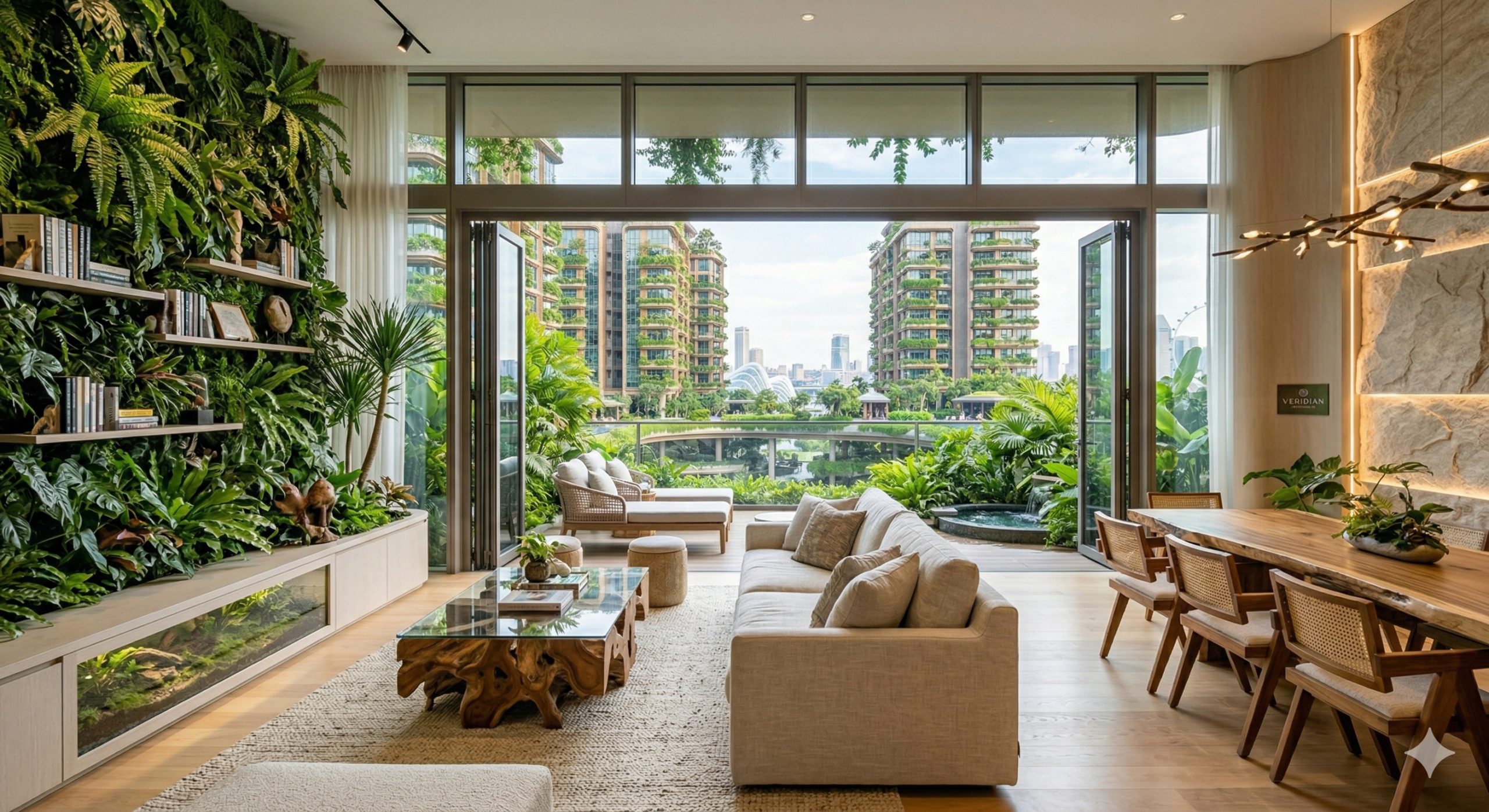
This can be as simple as maximising natural light, improving ventilation, introducing indoor plants, or using natural materials and textures throughout the home.
The Three Core Principles of Biophilic Design
- Incorporating natural elements such as plants, fresh air, and sunlight.
- Using colours, materials, and textures inspired by nature.
- Creating open, comfortable spaces that improve mood and well-being.
Biophilic design does not require a large home or a large renovation budget.
Why Biophilic Design Works Well in Condominiums
Smaller Condo Spaces
As condominium units become increasingly compact, many homeowners feel their homes lack openness. Natural elements such as greenery, soft lighting, and organic textures can make smaller spaces feel more spacious and refreshing.
Indoor-Friendly Plants
Singapore’s tropical climate allows many plants to thrive indoors. Unlike colder countries where maintaining indoor greenery can be difficult, homeowners here have access to a wide variety of low-maintenance indoor plants.
Abundance of Natural Light
Many condominiums feature large windows and balconies that allow sunlight to enter the home. This natural light supports both plant growth and the overall biophilic design concept.
How Biophilic Design Improves Daily Life
Beyond aesthetics, biophilic design can positively influence how you feel and function every day.
Better Air Quality
Certain indoor plants can help improve indoor air quality by reducing airborne pollutants. This creates a more comfortable environment, especially for people who spend long periods indoors.
Improved Mental Well-Being
Studies have shown that exposure to nature can reduce stress, improve mood, and increase focus. A home designed with natural elements often feels calmer and more relaxing, making it particularly beneficial for those who work from home.
Better Sleep Quality
Bedrooms that incorporate natural materials, calming colours, and softer lighting can promote relaxation and support better sleep quality.
Simple Ways to Add Biophilic Design to Your Condo
Transform Your Balcony into a Mini Garden
Most Singapore condominiums come with balconies or planter boxes. These areas can easily be converted into small garden spaces that strengthen your connection with nature.
Add Indoor Plants
You do not need to fill your home with dozens of plants. A few easy-care varieties can make a significant difference.
Popular low-maintenance options include:
- Snake Plant
- ZZ Plant
- Pothos
These plants are well-suited for indoor environments and require minimal maintenance.
For additional recommendations, refer to NParks’ guide to indoor plants:
Choose Natural Materials for Furniture and Finishes
Instead of relying heavily on glossy plastics and synthetic finishes, consider incorporating natural materials such as:
- Wood
- Bamboo
- Linen
- Stone
- Terrazzo
- Rattan
These materials add warmth, texture, and a stronger connection to nature.
Common Biophilic Design Mistakes to Avoid
Avoid Overcrowding Your Home with Plants
While greenery is an important element of biophilic design, too many plants can make a space feel cluttered and difficult to maintain. Start with a few plants and gradually expand your collection.
Choose Plants That Match Your Home’s Conditions
Not all plants thrive in every environment. Consider your home’s lighting conditions before selecting plant species to ensure they remain healthy.
Do Not Block Natural Light
Large furniture pieces, bulky storage units, and heavy curtains can prevent sunlight from entering the home. Natural light is a fundamental part of biophilic design, so keeping spaces bright and open is essential.
Conclusion
Biophilic design is more than a passing trend. It offers practical, long-term benefits such as improved well-being, better sleep quality, reduced stress, and a stronger connection to nature.
If you are looking to create a home that feels warm, peaceful, and refreshing, biophilic design may be the perfect approach for your renovation.
Interested in incorporating biophilic design into your home?